



Medically reviewed by Dr. Thu T. Pham, M.D., of Nova Eye Experts.
Three treatments, three different problems
People usually come in having read about one of these by name. A friend had IPL. A post mentioned the eyelid-cleaning thing. The question is almost always “Should I get that one?”
It depends on what’s wrong. “Dry eye” covers several problems that feel identical from the inside: burning, grit, blur that clears when you blink, watering that makes no sense for a condition called dry. OptiLIGHT, OptiLIFT and BlephEx each go after a different cause.
First, where dry eye comes from
Every blink lays down a thin film over the eye in three layers. A mucus layer holds it to the surface. A watery layer makes up most of it. And on the outside sits a fine coat of oil, made by the meibomian glands along the rims of your eyelids, that keeps the water from evaporating.

Most chronic dry eye starts with that oil. When the meibomian glands get blocked or inflamed, a condition called meibomian gland dysfunction, the oil thickens toward the consistency of cold butter and stops flowing. Tears then evaporate within seconds of a blink, however much water your eyes make. That’s why artificial tears so often buy you ten minutes and nothing more.
The second common problem sits right next to it, on the lash line. Bacteria, debris and a sticky biofilm build up along the eyelid margins. That’s blepharitis. It irritates the lids, and it clogs the same gland openings the oil is trying to get out of.
The third problem is less common: the eye doesn’t make enough of the watery layer. None of these three is built for that one; it’s usually managed with prescription drops or punctal plugs.
OptiLIGHT: for inflamed oil glands
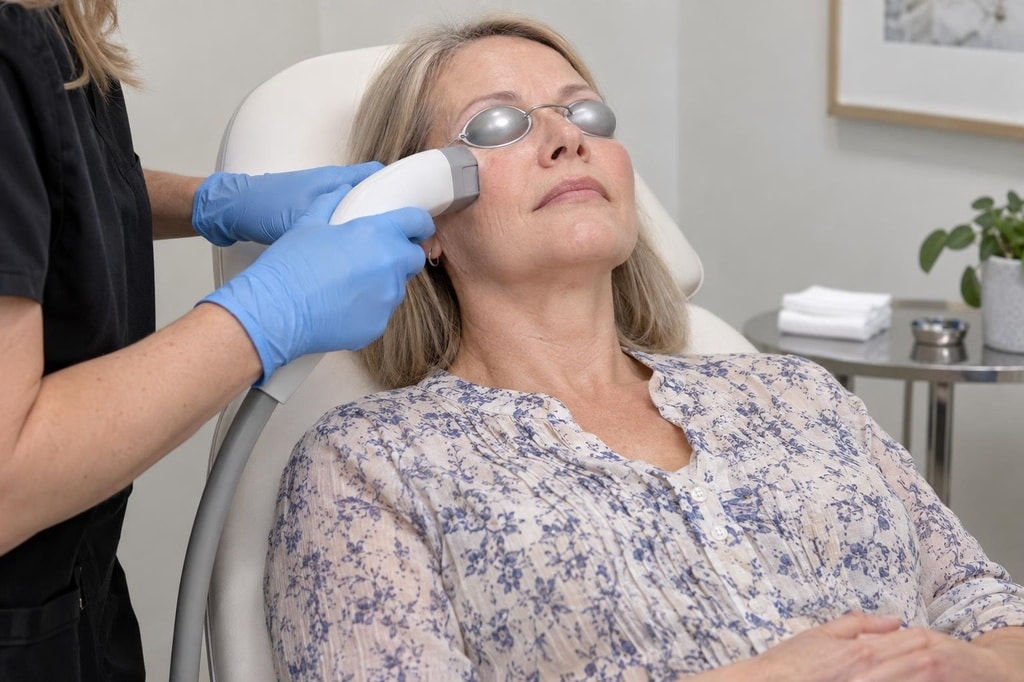
OptiLIGHT is intense pulsed light, IPL, and it’s the first and only IPL treatment FDA-approved for dry eye caused by meibomian gland dysfunction.
Gentle pulses of light go on the skin around the eyes. The goal is to calm the inflammation in and around the glands, so they can start releasing oil normally again and the tear film gets its seal back. Most patients see improvement after a series of four sessions. They’re typically spaced two to four weeks apart, and each one takes about 10 to 15 minutes. After the series, a maintenance session every six to 12 months is recommended.
IPL isn’t for everyone. Patients with darker skin types aren’t candidates for OptiLIGHT, which is one reason it matters that OptiLIFT works on any skin type. Certain medical conditions, lupus and herpes among them, also rule it out. We go through your medications and medical history thoroughly at the evaluation before it’s recommended.
OptiLIFT: for thick oil and a weak blink
OptiLIFT pairs two things. Radiofrequency energy warms the tissue around the eyelids, which helps melt the thickened oil trapped inside the meibomian glands so it can flow again. Then dynamic muscle stimulation, called DMSt, gently strengthens the eyelid muscles.
The muscle part surprises people. A lot of us blink badly. We blink less at a screen or a windshield, and many blinks don’t close all the way, so the lids never press out the oil or spread the tears across the eye. If you spend the day on I-66 and the evening on a laptop, that’s you. OptiLIFT works on the blink itself, not just on what’s in the glands.
There’s a cosmetic side effect some patients like: the radiofrequency also tightens skin and softens fine lines around the eyes.
A typical course is four sessions, one week apart. Any skin type is eligible. It isn’t an option if you have a pacemaker or a defibrillator, or metal implants near the eye area.
BlephEx: for the lash line
BlephEx is the simplest of the three. It’s a quick in-office procedure that uses a medical-grade micro-sponge to carefully clean the eyelid margins, removing the biofilm, bacteria and debris that feed blepharitis and chronic dry eye.
It’s repeated every four to six months. The buildup comes back, the same way plaque comes back after a dental cleaning, and the cleaning is how you stay ahead of it.
It also helps everything else work. With the lash line clear, the gland openings aren’t fighting through debris, and other dry eye treatments tend to do more.
People brace for it. They don’t need to. It isn’t painful, and Dr. Pham describes it as more like a tickle along the lids. Afterward, keep up warm compresses and lid wipes at home.

Choosing between OptiLIGHT and OptiLIFT
Both are aimed at the meibomian glands, which is why people ask about them together. They get there differently. OptiLIGHT goes after inflammation. OptiLIFT goes after thick oil and a weak blink.
Which one fits you is a clinical call made after the doctor has looked at your glands and lids. In Dr. Pham’s experience, OptiLIGHT is especially helpful for blepharitis and lid inflammation, patients with ocular rosacea for example. OptiLIFT is especially helpful when the lower lids have gone lax.
Plenty of patients have both, and the two treatments work in synergy. BlephEx can help anyone with long-standing, chronic inflammation and dry eye, whichever of the other two they’re doing.
The evaluation comes first
You can’t tell which of these problems you have by how your eyes feel. So the visit starts with finding the cause.
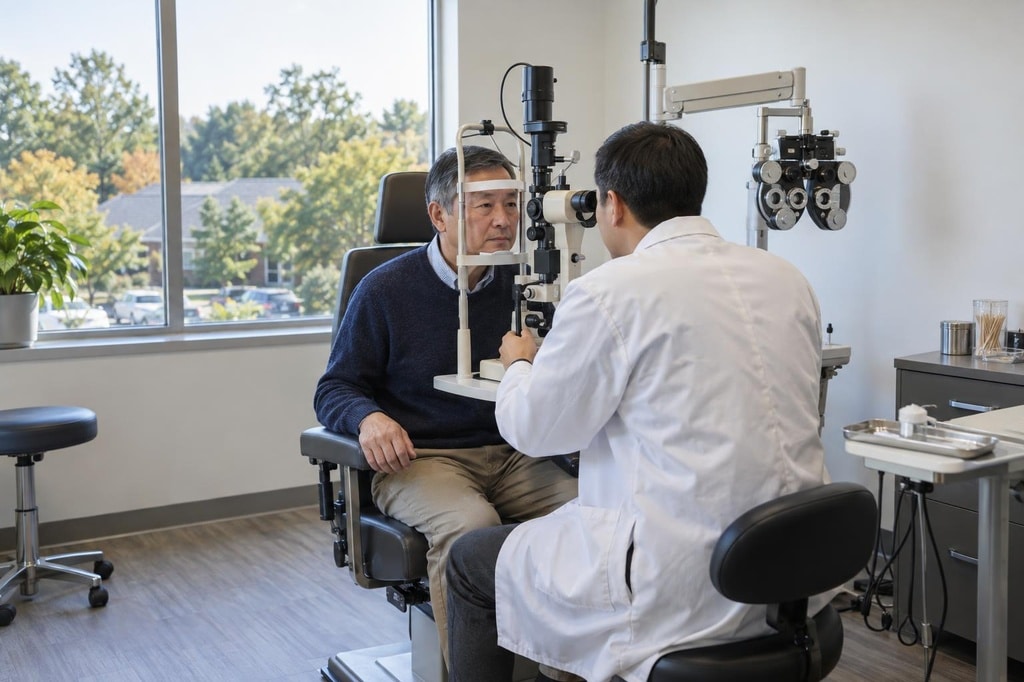
It starts with a short questionnaire about when symptoms show up, what makes them better or worse, and what you’ve already tried. Then the doctor looks at the eyelid margins and meibomian glands under magnification, measures how long your tear film holds together between blinks, and checks the cornea for damage from dryness. Where it helps, iTrace visual function testing shows how an unstable tear film is blurring your vision from one blink to the next.
Where each treatment happens
Evaluation, follow-ups and BlephEx all happen at our Warrenton office on Hospital Drive. OptiLIGHT, OptiLIFT and iTrace testing are done at our Manassas office, which has the room for that equipment.
None of the three involves dilating your eyes, so you can drive yourself there and back.
If cataract surgery is somewhere in your future
This is the reason to take dry eye seriously even if it’s only an annoyance right now.
The measurements that choose your lens implant are taken through the tear film. If the surface of the eye is dry or irregular, those measurements come out wrong, and the result after surgery suffers for it. In Dr. Pham’s experience, the ocular surface is the most common cause of blur or disappointment after cataract surgery, especially with multifocal lenses. So NOVA Eye Experts evaluates the surface and tear film thoroughly before surgery, and treats dry eye before anyone measures.
Three questions we get most
Can I just pick the treatment I’ve read about?
You can ask for it, and it’s a good starting point for the conversation. But the three treatments go after different causes, and a treatment aimed at the wrong one won’t help much. The evaluation tells us which problem you have.
Do I need all three?
Not usually all at once, and some patients need none of them. But dry eye is complex and usually has more than one cause, so it often takes more than one treatment. OptiLIGHT and OptiLIFT pair well, BlephEx helps the others work better, and any of them may be combined with prescription drops for the best result.
Will I need to keep doing it?
Yes. There’s no cure for dry eye disease, and Dr. Pham is firm on that. It’s chronic. In her words, these treatments can be a game changer, but they aren’t a cure. BlephEx is repeated every four to six months because the buildup returns, and OptiLIGHT calls for a maintenance session every six to 12 months. At home, the daily warm compresses and lid care keep going. You may still need artificial tears, just less often than before.


