




Medically reviewed by Dr. Thu T. Pham, M.D., of Nova Eye Experts.
Every treatment does one job
Glaucoma damages the optic nerve, the cable that carries what your eye sees to your brain. The fibers in that cable don’t grow back. So nothing on this list restores vision that’s already gone, and anyone who implies otherwise is selling something.
What treatment does is lower the pressure inside the eye enough to slow or stop further damage. Drops, laser, an implant, surgery. They’re different routes to the same number.
Your eye makes a clear fluid all day long and drains it out through a fine mesh where the iris meets the cornea. Some treatments turn production down. Others open the drain. The question your doctor is answering is how far your pressure needs to come down, and which route gets it there with the least asked of you.
Eye drops
Drops are the treatment most people have heard of. Some reduce how much fluid the eye makes. Others help it drain.
They work if you use them. Every day, on schedule, for years. That’s the catch, and it’s bigger than it sounds. Glaucoma doesn’t hurt and doesn’t blur, so there’s no reminder from your own body when you skip a dose. A missed evening doesn’t feel like anything. A missed month can.
Drops can also be a nuisance. Stinging, red eyes, and redness around the lids are common complaints. Some drops cause eyelash growth or a change in the color of the iris or the skin around the eye. Some can affect your heart rate, energy, or breathing, which matters if you have asthma or a heart condition.
If a drop bothers you, costs too much, or you keep forgetting it, tell your doctor. Don’t just stop. There’s almost always another drop, a simpler schedule, or a different route entirely.
A few habits help. Tie the drop to something you already do every day, like the coffee maker, the evening feed, or brushing your teeth. Keep a spare bottle where you’ll actually be at that hour. If you use more than one drop, Dr. Pham usually has patients wait 5 to 10 minutes between them, so the second drop doesn’t wash the first one out. Sometimes she adds one more step: close your eyes after the drop and press gently on the inner corner, by your nose. That keeps more of the medicine in your eye and less of it reaching the rest of your body.
Laser
There are two glaucoma lasers, and they do different things.
SLT (selective laser trabeculoplasty) is for open-angle glaucoma, the common, slow kind. Short, low-energy pulses are aimed at the drainage mesh so it drains better. There’s no incision. For some patients SLT reduces the number of drops they need, and for some it takes the place of drops altogether. It doesn’t last forever. In Dr. Pham’s experience the effect typically holds for two to five years. She does repeat it, and she’s upfront that a second treatment may not work as well as the first.
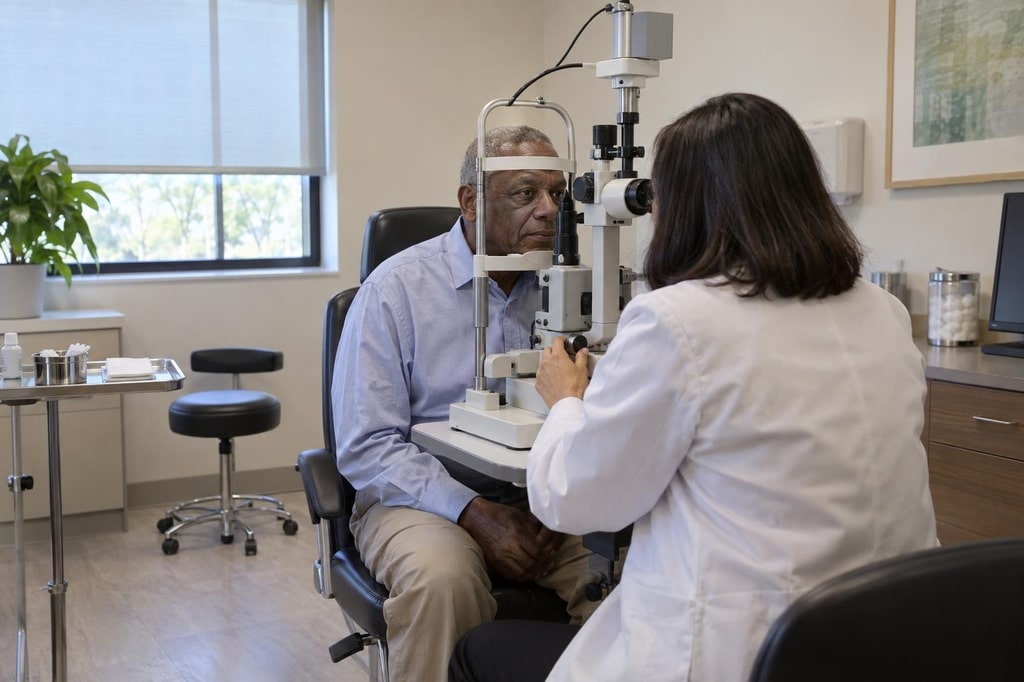
LPI (laser peripheral iridotomy) is for narrow or closed angles, where the iris sits too close to the drain. The laser makes a pinpoint opening in the iris so fluid can get around it and reach the drain. For someone with narrow angles, it can head off a sudden angle-closure attack.
Both lasers are done at NOVA Eye Experts’ Manassas office. You don’t need to be dilated, so you can drive yourself there and back. For Warrenton patients that’s one trip up 29, not a standing commute.
Where to start is a judgment call
Plenty of doctors start almost everyone on drops. Dr. Pham offers both at the first diagnosis, SLT and drops, and walks through the tradeoff. She explains that studies show SLT is more effective at preventing the disease from progressing. Drops, for their part, can irritate the eyes, cause redness, or even change the color of the iris. From there, it depends on how you want to proceed.
If you already know you won’t use a drop every night, say so at that first visit. It’s the kind of thing that shapes the choice.
A slow-release implant
Durysta is a tiny implant placed inside the eye. It releases a pressure-lowering medication over time and then dissolves on its own.
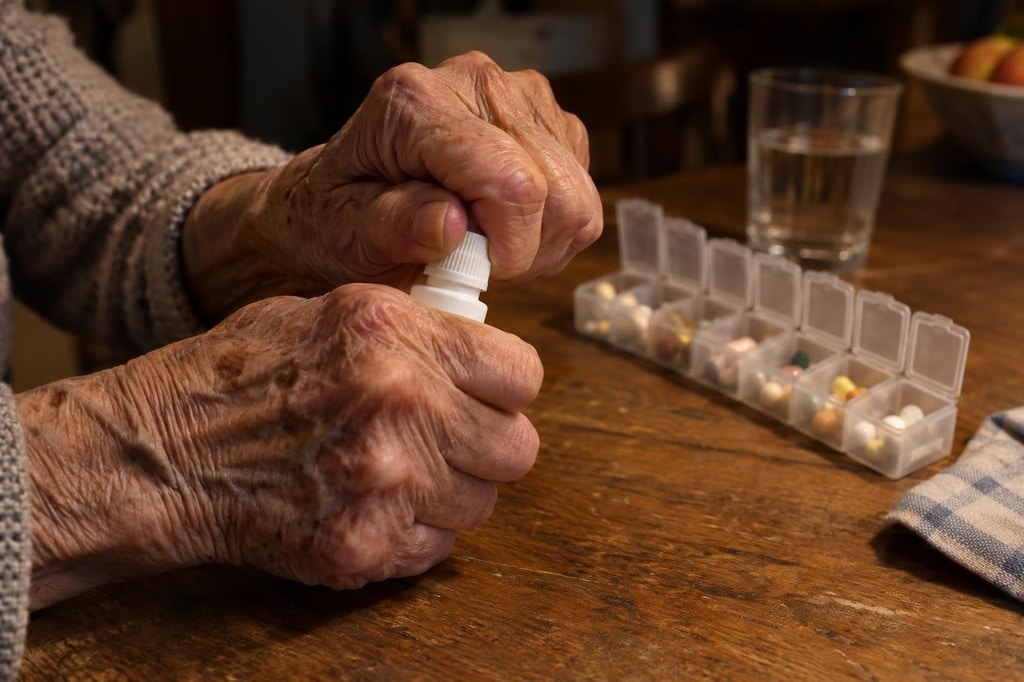
Dr. Pham does it right in the office. It takes about five minutes, and she describes it as painless. The patients she considers good candidates are the ones who have trouble getting drops in or remembering to take them, whether that’s arthritis in the hands, a long medication list, or a memory that isn’t what it was. For them, it takes the daily reminder out of the equation for a while.
Surgery
Surgery sounds like the scary end of the list. In glaucoma, it covers two different things.
MIGS: minimally invasive glaucoma surgery
MIGS uses microscopic devices or instruments to improve the eye’s own drainage through a very small opening. NOVA Eye Experts offers several: the Hydrus microstent, which holds the drainage canal open; goniotomy, which removes a strip of the clogged mesh; and the OMNI, Streamline and Via360 systems, which reopen the eye’s natural canal without leaving an implant behind.
The appeal is what it can take off your plate. MIGS can cut down how many drops you depend on. Fewer drops can also mean less of the surface irritation that years of glaucoma drops cause, which doctors call medicamentosa. In Dr. Pham’s view, that can add up to better vision and a better day-to-day life, with minimal risk and a quick recovery.
MIGS can often be done through the same small incision as cataract surgery, so if you have both a cataract and glaucoma, ask about it. Dr. Pham decides case by case. She looks at how advanced the glaucoma is, where your pressure starts, how many drops you’re on, the health of your eye’s surface and what the drops are doing to it, and how much you want to cut back on drops. She also points out that cataract surgery by itself can lower eye pressure by about 20 percent.
Her default is the least invasive procedure, with the least risk and the best vision. “Just because we can add MIGS doesn’t mean we should,” she says. “All procedures carry some risk.”
She does sometimes do MIGS on its own, for patients who’ve already had cataract surgery and still need their pressure lower.
Trabeculectomy and tube shunts
When pressure stays too high despite drops, laser and MIGS, or the disease is already advanced, there are two traditional surgeries. A trabeculectomy creates a new drainage channel under the upper eyelid. A tube shunt places a small device that carries fluid out of the eye to a collection area your surgeon creates. These are bigger operations with a longer recovery, and they’re for patients who need them.
For Warrenton patients, MIGS and traditional glaucoma surgery are done at Haymarket Surgery Center, about 25 minutes from the Hospital Drive office. It’s the same center NOVA uses for cataract surgery, with an anesthesia team present so your comfort can be adjusted during the procedure.
The treatment nobody lists: showing up
Every option above only works if someone keeps checking whether it’s working. Pressure readings, visual field tests, OCT scans of the nerve, repeated on a schedule over years. A change in the numbers is often the only early sign that it’s time to adjust.
For Warrenton patients, the monitoring happens in Warrenton. Visual field testing and OCT imaging are both done at the Hospital Drive office, with Dr. Pham or Dr. Kang reading this year’s results against your own history. The follow-up that’s twenty minutes from home is the one that gets kept.

Three questions we get most
Can glaucoma be cured?
No. Vision already lost to glaucoma can’t be brought back. But treatment can slow or stop further damage, and with consistent care most people keep useful vision for life.
If my drops are working, can I stop them?
Not on your own. The drops are working because you’re using them, and the pressure usually climbs back when you stop. If you want off drops, ask whether laser or another option could take their place.
Is glaucoma surgery risky?
Every surgery carries some risk. MIGS is designed to be gentler with a quicker recovery than traditional surgery, which is why it’s often considered earlier. Trabeculectomy and tube shunts are reserved for eyes that need more pressure lowering than other options can provide. Your surgeon should walk you through the tradeoffs for your eye specifically.
If it’s been a while
If you’re on drops and haven’t had a pressure check or a visual field test in over a year, that’s the next step. If you’ve never been checked and you’re over 40, or someone in your family has glaucoma, start there instead. Glaucoma has no early warning signs, which is why the exam matters.


