




Medically reviewed by Dr. Thu T. Pham, M.D., of Nova Eye Experts.
It isn’t in your head
Summer is the easy season for dry eyes. Researchers who looked at 3.4 million VA eye clinic visits found dry eye diagnoses were lowest in summer and climbed in spring and winter. In Dr. Pham’s experience, winter is typically the worst season for dry eyes, and symptoms get worse all through the fall on the way there.
Fall is when the easy season ends and three or four separate problems start stacking on top of each other, usually in the same few weeks. If your eyes feel fine in August and gritty by Halloween, that’s the pattern, and it has causes you can do something about.
Ragweed doesn’t quit when summer does
Ragweed starts releasing pollen in August, on the first run of cool nights and warm days, and keeps going into October or until the first hard frost. Counts in many parts of the country peak in early to mid-September. On the East Coast it’s the main fall allergen, and it grows along every fence line and road shoulder between Warrenton and Culpeper.

Pollen doesn’t cause dry eye. It aggravates it. An eye that’s already short on a good tear film gets itchy and inflamed, and you rub it, and that makes it worse.
Then there’s the fix. Antihistamines, the allergy pills most people reach for in September, dry the eyes. So the treatment for the itch can set up the burn.
If your eyes are still irritated after the first frost, when the ragweed’s done, allergies probably weren’t the whole story.
The leaves come down
Wet leaf piles and decaying yard debris are where fall mold thrives. Raking, mulching, clearing gutters, mowing over a lawn full of leaves: all of it puts you in the middle of it, usually on a breezy afternoon.
Wind is its own problem. It pulls moisture off the surface of the eye faster than tears can replace it, and October in open country is windy. A morning in a tree stand, a trail ride, an afternoon splitting firewood. Hours of it.
Wraparound sunglasses or safety glasses help more than people expect. They cut the wind and keep pollen and dust off the eye.
Then the heat comes on
This is the big one. It’s why winter is usually the worst stretch, and it starts in fall.
The first cold night, the furnace kicks on or the wood stove gets lit, and indoor humidity starts to fall. The VA study linked the winter rise in dry eye to this, low humidity from indoor heating. Forced air blows it straight across your face. A wood stove bakes the room dry. Your eyes felt fine in September and they’re stinging by January, and the slide started the week you turned the thermostat up.

A humidifier in the room where you spend the most time helps. So does pointing car and floor vents away from your face. Small changes. Over a long heating season, they add up.
Shorter days, more screens
When it’s dark at five, more of the evening moves indoors and onto a screen. People blink far less while they’re reading or looking at a monitor, and every blink is what spreads a fresh layer of tears across the eye. Fewer blinks, drier eye.
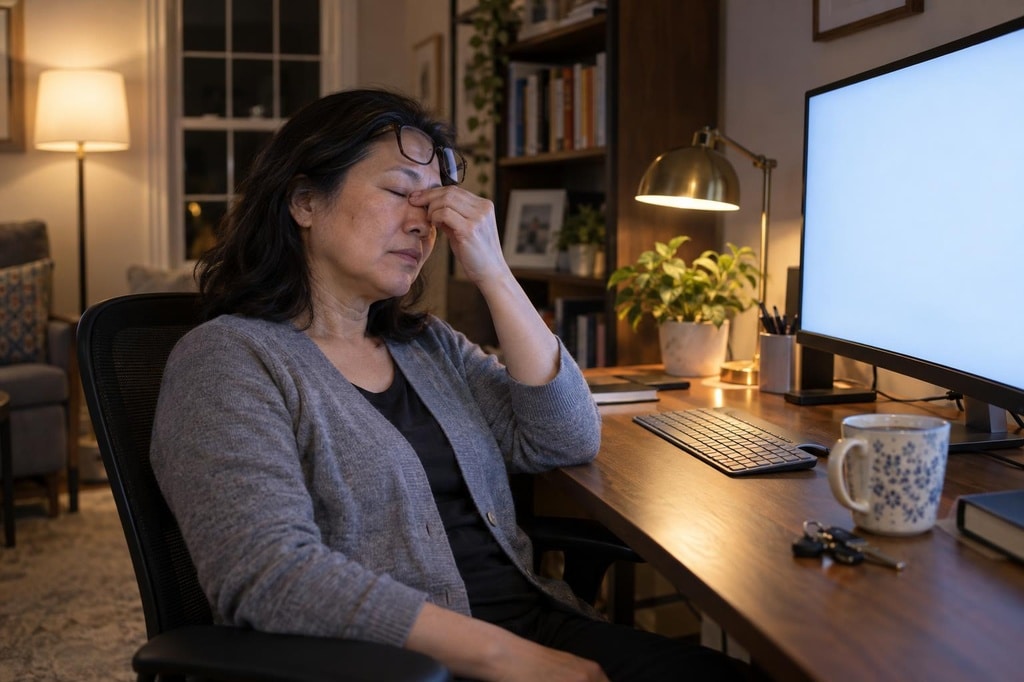
Commuters get it twice. Long drives on 29 or 66 in the dark, then a full day at a desk.
Why drugstore drops stop working
Your tear film has three layers. The outermost one is a thin coat of oil from tiny glands along your eyelid margins, and it keeps the watery layer underneath from evaporating.
Most chronic dry eye starts with that oil. When those glands get blocked or inflamed, the oil thickens and stops flowing, and your tears evaporate within seconds of a blink. Artificial tears add water. If the oil is the problem, the drops evaporate too.
And sometimes the eyes water constantly. That surprises almost everyone. An irritated surface triggers a flood of reflex tears, but they’re mostly water, they don’t stay put, and the eye is dry again a minute later. Wind and cold make it worse, which is why fall is when a lot of people first notice it.
If cataract surgery is on your calendar
The measurements that choose your lens implant are taken off the front of the eye, through the tear film. If that film is unstable, the measurements aren’t reliable, and the result after surgery suffers.
In Dr. Pham’s experience, the most common reason for blur or disappointment after cataract surgery is the surface of the eye, not the lens. That’s especially true with multifocal lenses. So NOVA Eye Experts evaluates the tear film and ocular surface thoroughly before surgery, and if dry eye needs treating, it gets treated before anyone measures.
If you’re planning surgery for this winter and your eyes are already gritty, say so early. It can change the order of things.
What helps
Some of it you can start this week:
- A humidifier in the bedroom or wherever you spend your evenings
- Wraparound glasses outdoors on windy days and for yard work
- Vents pointed away from your face, at home and in the truck
- Deliberate breaks from screens, and a conscious blink or two when you take them
- Warm compresses and lid hygiene, if your eyelids feel crusty in the morning
- Preservative-free artificial tears, if you’re using drops more than a few times a day
If you’re doing all of that and still reaching for drops constantly, it’s time for an evaluation. Treatment depends on which part of the tear film is failing. Prescription drops that calm inflammation, a nasal spray that triggers your own tears, punctal plugs, and in-office treatments for the eyelid glands. BlephEx cleans the lid margins and is done right at the Warrenton office. OptiLIGHT and OptiLIFT treat the oil glands directly and are done in Manassas. None involve dilation, so you can drive yourself.
Whatever you and your doctor choose, Dr. Pham’s advice is to start early. Most treatments take a while to work. With OptiLIGHT, patients typically notice improvement after the second or third session, which is at least four to six weeks in. Prescription drops such as Cequa or Xiidra take at least two to three weeks before the difference is noticeable. Start in the fall and treatment has a head start on the coldest weeks. Wait until January and you’ll spend part of the worst season waiting for it to kick in.
Three questions we get most
Is it allergies or dry eye?
Often both, and they feed each other. Pollen inflames the surface of the eye, and allergy pills reduce tear production. If your eyes are still bothering you after the first hard frost, there’s likely a dry eye problem worth treating on its own.
Why do my eyes water so much if they’re dry?
Because an irritated eye floods itself with reflex tears. Those tears are mostly water and lack the oil that keeps them in place, so they run off and the eye dries out again quickly. Constant watering, especially in wind and cold, is one of the most common signs of dry eye.
Will it get better on its own in the spring?
The fall triggers ease, but spring brings its own. Dry eye diagnoses rise in spring too, alongside tree pollen. And untreated dry eye tends to move in one direction: blocked oil glands can shrink and stop working for good. Relief that depends on the weather isn’t relief.
Before the heat comes on
The Dry Eye Self-Test takes a couple of minutes. A dry eye evaluation at our Warrenton office on Hospital Drive, with Dr. Pham or Dr. Kang, will tell you which part of your tear film is failing and what fits.


